

I’ve been reading through my blog posts on September 11, 2001 and the days that followed. The things that stand out to me – in addition to the horror of the attack itself – are how massively we (or at least I) used the web to understand what was happening, and how rapidly the shock turned to bloodlust and calls for war. A year and a half later, my six-year-old was playing “Iraq war” in the school yard. 25 years later there is still war. A different war, technically, but it feels much the same.
I was a blogger so of course read blogs to understand what was going on. On the evening of September 11th, I posted that Blogger.com, the most popular blog host at the time, put up a custom search page on September 11th for blogs that mentioned the words “world trade” or “terrorist”. The next day I linked to various blogs sharing news.
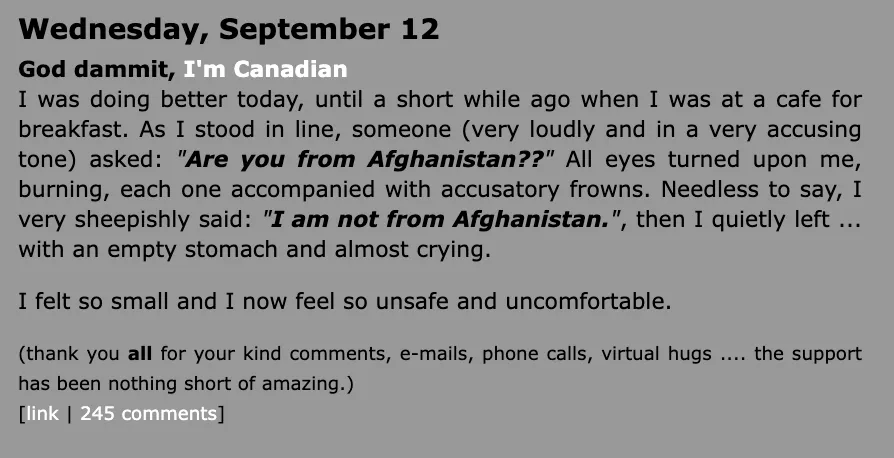
But by September 13 I was worried about all the anti-Muslim sentiment I linked to this post on a blog I followed, now gone but archived in the Wayback Machine.
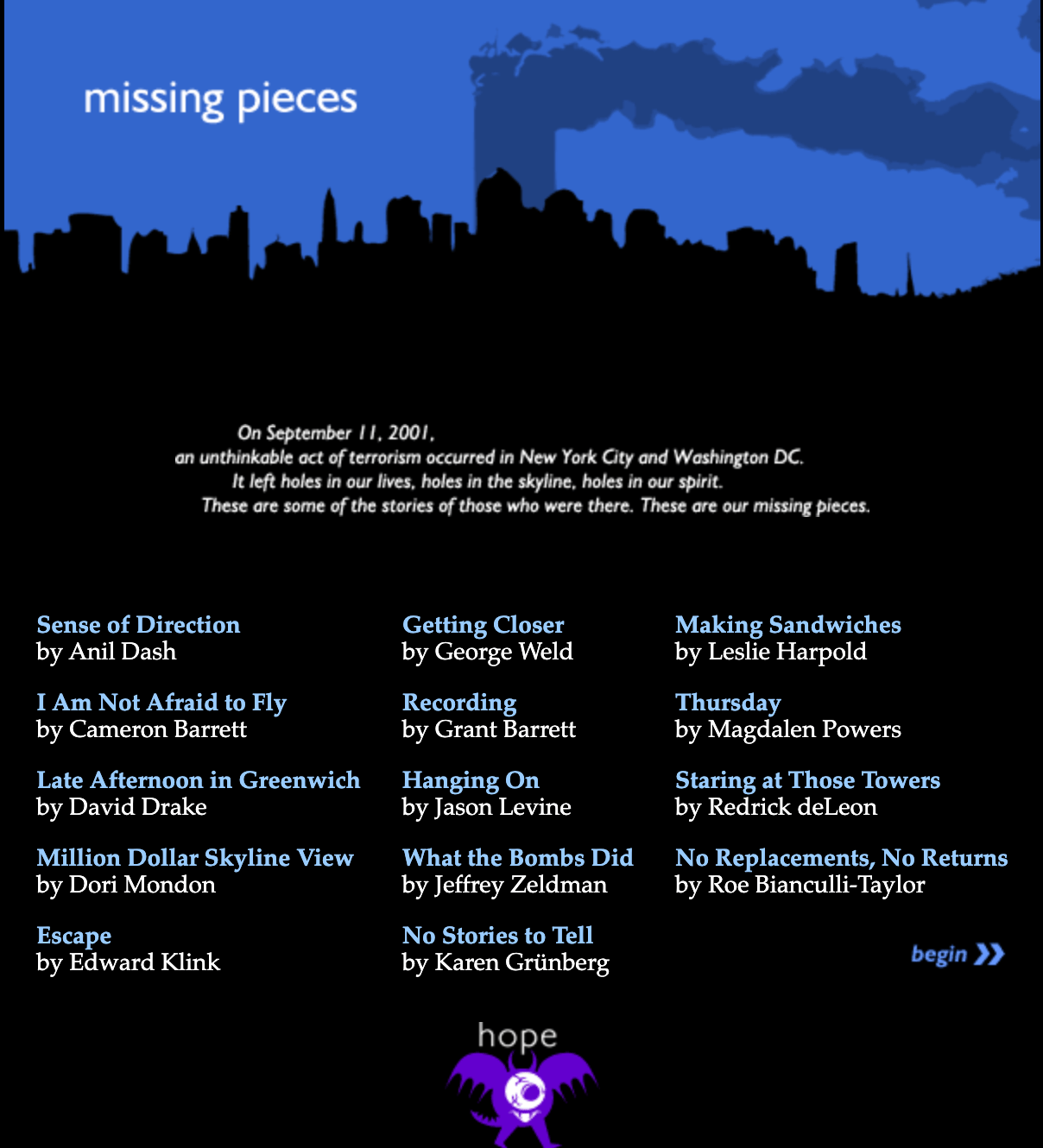
I linked to Fray.com (which still exists!), an online storytelling website, which had posted a cluster of stories from the 911 attacks they called Missing Pieces. You can still read them.
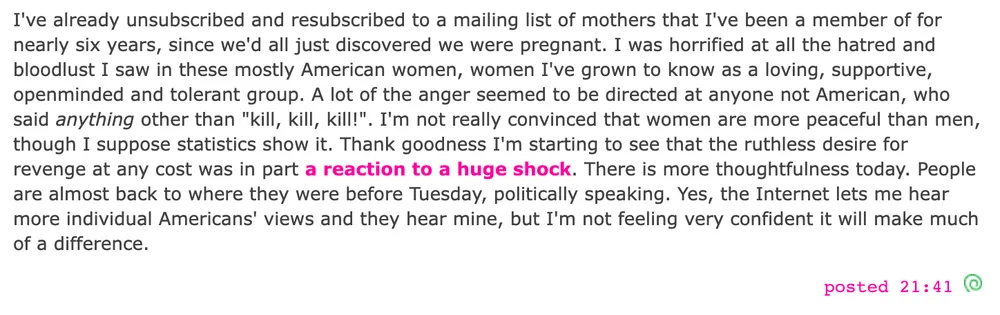
By September 16th I had unsubscribed and resubscribed to the email list I joined in 1995 when I was pregnant with my first kid. Most of the mums on it were American and the bloodlust they expressed after the first day or so absolutely horrified me.
Do people remember the bloodlust, how extreme it was? Was this a tipping point for the United States? By September 17 I gathered links about the internet and war, asking whether this was what a Napster war would look like. It sounds quaint but also ominous today.
I linked to the Library of Congress’s request for contributions to an archive of personal experiences of the attacks. Today you can browse their web archive for September 11th.

On September 22nd I deleted a post I regretted but discovered Google was indexing blogs daily because 200 people arrived at my blog after searching for “bin laden wanted dead or alive poster”.
I posted a link to a poem Alan Sondheim shared on the Nettime mailing list. It was called “Defile” and mimicked a tower, just one character on each line in a monospaced font. Here’s an archive copy.
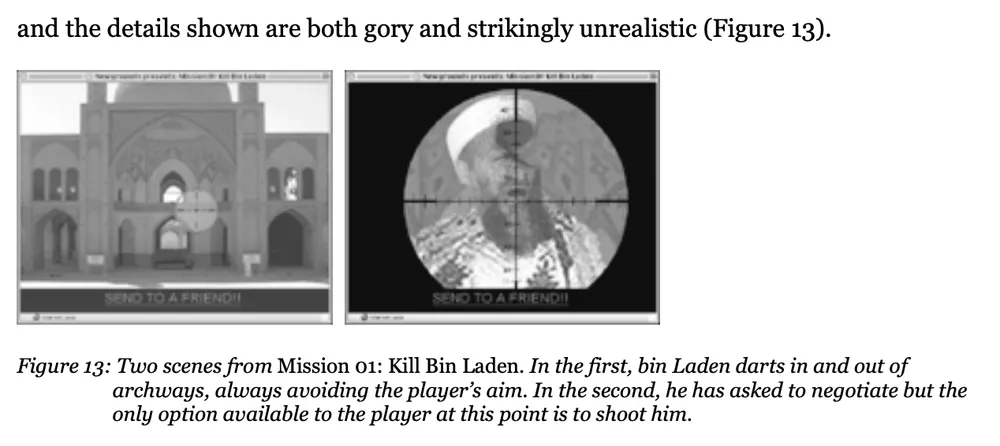
I discovered people were making games about Bin Laden, and Bin Laden skins for existing games. This all led to a whole chapter in my PhD thesis that I called “Click here to kill Bin Laden”.
By mid-October people were arriving at my blog after searching for “dancing bin laden” which presumably says something about collective trauma resolution. I was no able to figure out whether this referred to any actual meme. Please enlighten me if you know.
I think I’ll conclude this thread by linking to a story I posted to my blog a year and a half later, about my first-grader and classmates playing “the war in Iraq” in the schoolyard.
What an awful day September 11th was. And what awful consequences it had, for so many people, for so many years.
Discover more from Jill Walker Rettberg
Subscribe to get the latest posts sent to your email.